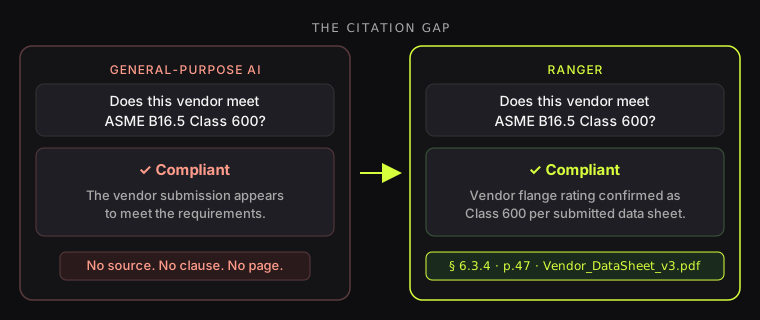
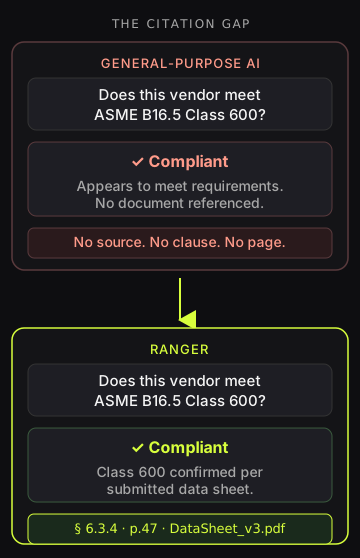
Picture a bid engineer asking a general-purpose AI tool to cross-reference a vendor submission against an ASME B16.5 Class 600 flange requirement. The tool returns a clean "compliant" answer. The flange spec is wrong, and the error does not surface until weeks later, at the fabricator. That is not an AI limitation story. It is an AI misapplication story. And it is happening across the industry right now.
Why Is Industrial Document Parsing a Different Problem Than Reading Text?
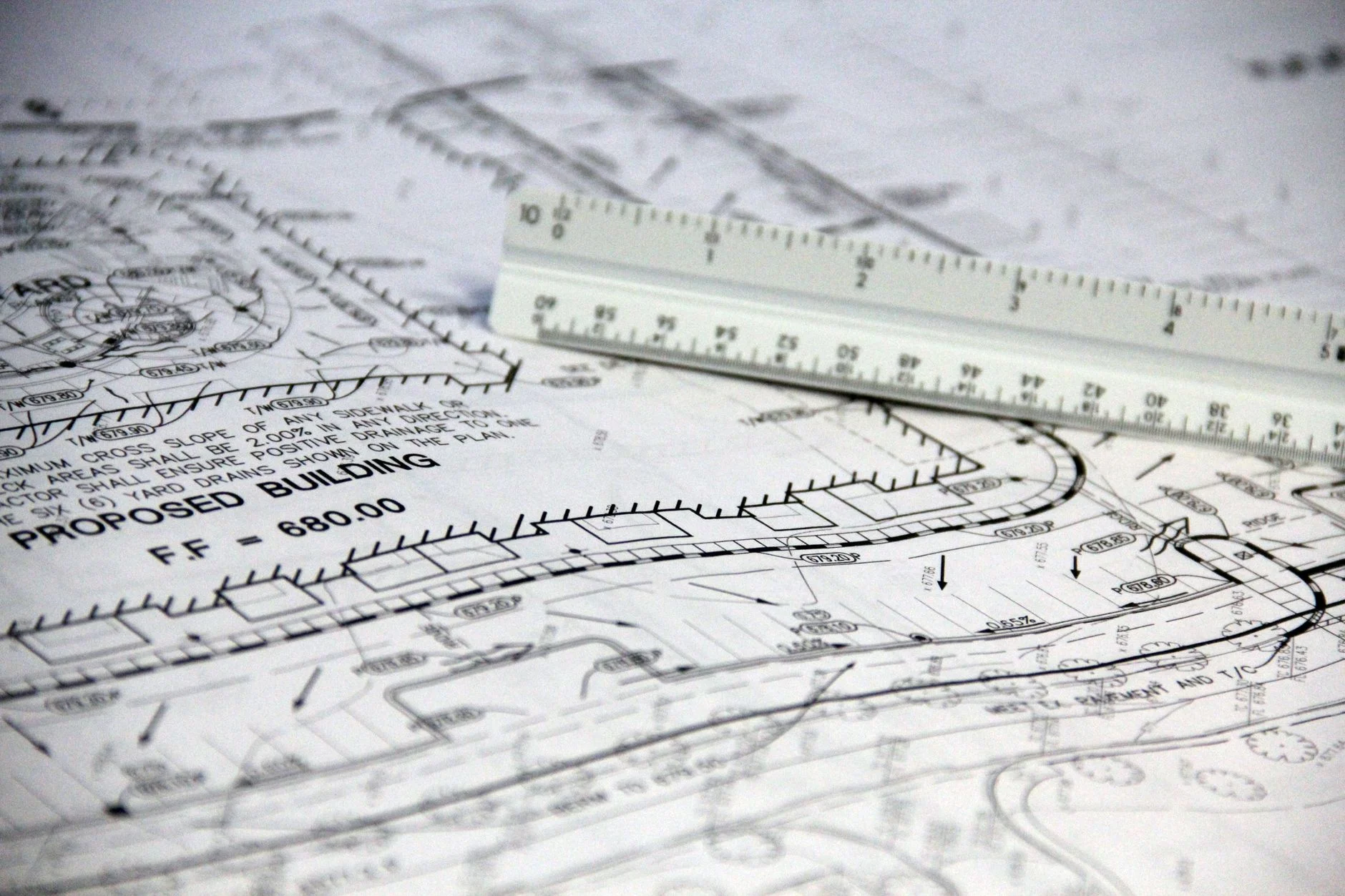
The current wave of general-purpose AI tools (ChatGPT, Microsoft Copilot, AutoRFP.ai, Inventive AI) were built to read text. Industrial documents aren't text. They're structured technical artifacts: 400-page EPC specifications with embedded clause hierarchies, vendor data sheets with misaligned columns from a scanned PDF, P&IDs exported from AutoCAD as flattened images, RFQ packages that mix ISO standards with client-specific deviations buried in a footnote on page 283.
When a general-purpose AI reads these documents, it does what it was trained to do: it generates plausible-sounding responses based on statistical patterns in its training data. It has seen ASME B16.5 discussed on the internet. It will sound confident about ASME B16.5. It will also be wrong, not randomly but systematically, because it's interpolating from general knowledge rather than reading your specific document.
The industrial procurement teams discovering this in 2025 and 2026 aren't naive. They tried these tools deliberately, in controlled settings. The results were consistent: general-purpose AI is useful for low-stakes text work. It is dangerous for technical specification review.
A single spec error in an industrial proposal doesn't just lose the bid. It can create contractual liability and fabrication rework that follows the project for years. The cost of a misread clause is not the cost of fixing the AI's answer. It's the cost of what was built to the wrong spec.
Why Don't ChatGPT, Copilot, and AutoRFP.ai Solve This?
The problem isn't that these tools are bad. It's that they were built for different problems.
ChatGPT / GPT-4o excels at general reasoning, drafting, and summarization. It has no training on your documents, no understanding of your client's specific technical deviations, and no mechanism for telling you when it's guessing. Ask it about API 610 centrifugal pump specifications for a specific application and it will produce a coherent response. Ask it whether a specific vendor's submission meets clause 6.3.4 of your client's technical requirements document, and it will fabricate an answer, citing nothing, flagging nothing, expressing full confidence.
Microsoft Copilot (including the M365 and SharePoint variants) improves search over your document corpus. It does not parse engineering drawings, understand piping isometric notation, or cross-reference a data sheet against a technical standard. For EPC bid teams, it is a better search engine, not a specification-review tool.
AutoRFP.ai and Inventive AI were built for SaaS procurement: security questionnaires, vendor onboarding, RFPs where questions are freeform prose and answers are drawn from prior responses. The template-based architecture breaks down when specs are 400-page technical documents with non-standard layouts, embedded drawings, and clause structures that vary by client, project, and jurisdiction.
Excel remains the dominant tool for bid evaluation at most EPC firms and industrial OEMs. It is reliable and auditable. It is also entirely manual, completely disconnected from the source documents, and unable to flag when the question being answered doesn't match the document being cited.
What Does Industrial Document Parsing AI Actually Need to Do?
After deploying Ranger across energy, EPC, and precision manufacturing environments, five requirements separate AI that works in production from AI that performs well in demos:
1. Every answer must be cited to the source clause. Not summarized, not paraphrased: cited. The reviewer needs to see: "This answer is drawn from Section 6.3.4, page 47 of [document name]." If the answer can't be cited, it doesn't appear.
2. The system must know when it doesn't know. This sounds obvious. It is not how general-purpose AI works. Ranger's architecture returns a "not found in your documents" response when the answer isn't present, rather than generating a plausible one. Industrial IT leads have told us, repeatedly, that this behavior is the single biggest trust driver in rollout.
3. The system must parse documents as they actually exist. Not as clean, well-formatted text exports. Industrial documents arrive as scanned PDFs with skewed pages, CAD exports with missing fonts, vendor data sheets in fourteen different template formats, and specification packages assembled over a decade of contract revisions. Industrial document parsing AI must handle this at ingestion, not require pre-cleaning.
4. The system must be grounded in your documents, not a generic corpus. Ranger doesn't use a shared knowledge base. It grounds on the documents your team uploads: client specs, licensed industry standards, historical proposals, your technical knowledge base. An answer about NACE MR0175 comes from your copy of NACE MR0175, not from a training corpus that may have ingested an outdated revision.
5. The audit trail must be accessible. Industrial procurement is auditable. When a bid team makes a technical compliance decision, that decision must be traceable. Ranger's citation layer provides this automatically: every answer references its source document, clause, and page, reviewable by a human against the original.
What Does Reliable Industrial Parsing Look Like in Production?
The teams that have deployed Ranger for technical document review report a consistent onboarding pattern: the first two weeks are about trust-building, not feature adoption.
The question isn't "can this tool read my documents?" It's "can I trust what it tells me about my documents?" That trust is built through the citation layer. When a reviewer asks Ranger about a technical requirement and sees the exact clause and page number in the response, the workflow shifts from "is this right?" to "let me verify this specific claim." That is a different cognitive task, and a dramatically faster one.
See how Ranger cites every answer back to source
Book a technical walkthrough with our engineering team. Bring your own documents.
Where Is Industrial AI Heading in 2026?
The 2026 AI market in industrial procurement looks like 2019 in CRM: dozens of tools claiming to "read your documents," most built on the same general-purpose foundation with a thin vertical wrapper. The differentiation will not come from which base model a vendor uses. It will come from the architecture decisions made around grounding, citation, and failure modes.
Industrial IT leads evaluating these tools should apply a consistent test: show me a hallucination scenario. Show me what the tool returns when the answer isn't in the document. Show me the audit trail for a compliance decision. If the vendor can't demonstrate this in a live session, with real industrial documents and not a curated demo dataset, the tool is not ready for production.
The manufacturing and infrastructure investment wave of 2025–2027 is creating a procurement volume problem that industrial enterprises have never faced at this scale. Re-shoring initiatives, energy transition capital deployment, and EPC project backlogs are generating more RFPs and RFQs than most bid teams can physically process. The teams that solve the document intelligence layer now, with architecture that cites rather than guesses, will outcompete on cycle time, accuracy, and bid capacity. The teams that deploy general-purpose AI into technical review will carry liability they don't yet know they're accumulating.
Key Takeaways
- General-purpose AI tools hallucinate industrial specifications because they interpolate from training data rather than reading your specific documents
- ChatGPT, Copilot, AutoRFP.ai, and Excel each fail at industrial document parsing for distinct structural reasons: they were built for different problems, not poorly built
- Industrial document parsing AI must cite every answer to a specific source clause: the citation is the trust mechanism, not an optional feature
- The "not found" response is a feature, not a failure: AI that says it doesn't know is safer than AI that guesses with confidence
- In any vendor evaluation, demand a live hallucination test with real industrial documents, not a curated demo dataset
- The industrial teams that solve document intelligence now will outcompete on bid cycle time and technical accuracy as procurement volumes scale through 2027
Ranger is the industrial document intelligence layer for EPC firms, pump and valve OEMs, and energy operators. If your bid team is evaluating AI tools for technical specification review, see what Ranger looks like for your team.