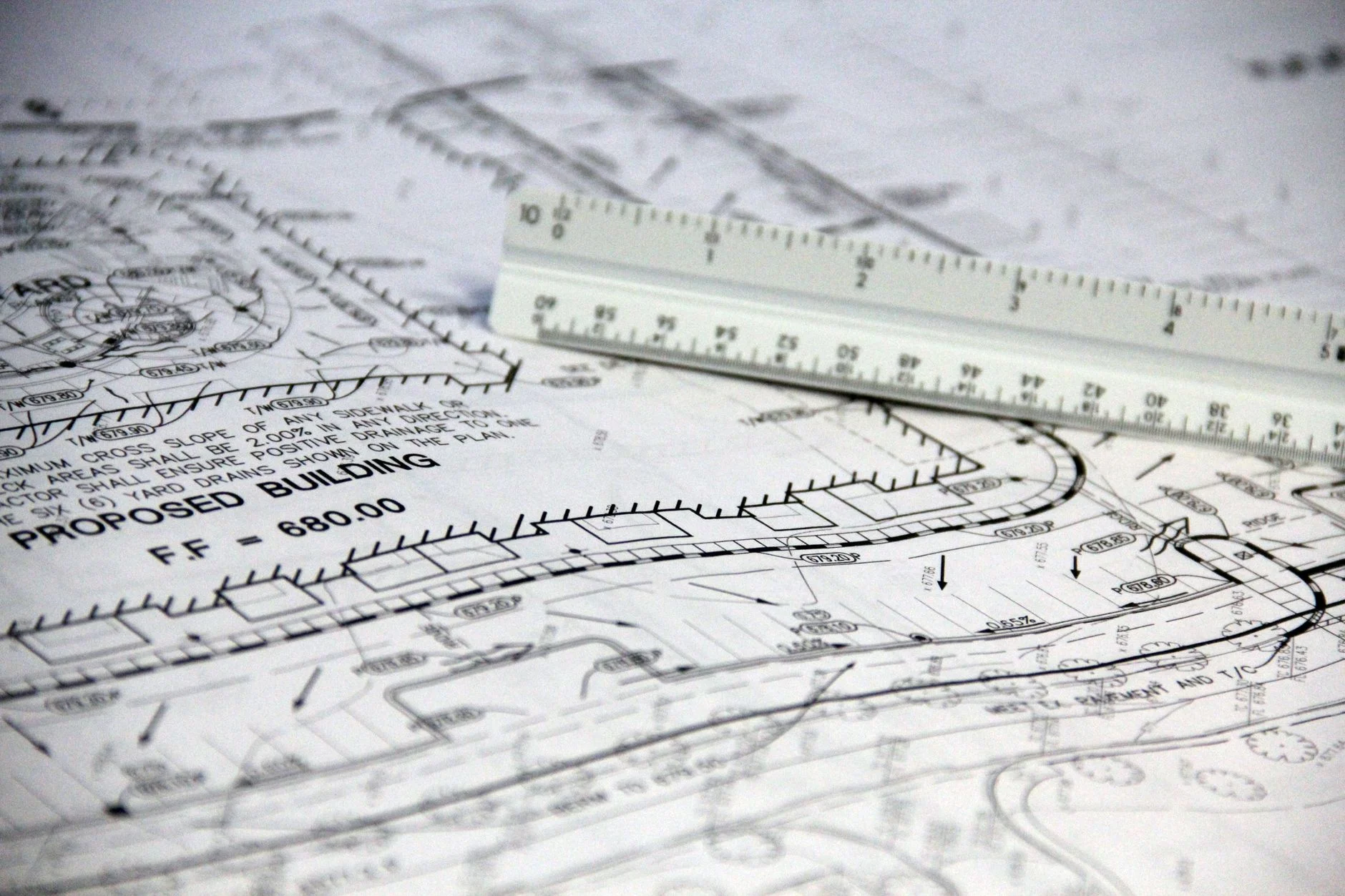
The 2026 pitch for industrial document AI is that it reads anything: scanned datasheets, 400-page specifications, purchase orders exported from somebody else's ERP. On the reading part, that claim has largely become true. The bottleneck moved somewhere less demo-friendly, and most pilots find it in about week three. The system lifts P/N 4A-2217-B REV C cleanly off the page, and then has no idea what it is.
Why does industrial document AI stall at the part number?
Because extraction and resolution are two different problems, and only extraction got solved. Extraction is getting the string off the page. Resolution is deciding what that string refers to inside your own catalog, material master, or product families. Nothing in the extraction step knows whether 4A-2217-B is a pump you build, a seal kit you stock, a competitor's model number, or a transcription error in the customer's own requisition.
The difficulty is structural, not technical debt. A single physical item carries several identifiers at once: a tag number on the customer's P&ID, the customer's material number on the purchase order, the manufacturer part number (MPN) from whoever made the component, the supplier's catalog code, an internal material number in SAP, and a standard designation such as an API 610 pump type or a DIN flange rating. None of those strings are derivable from each other, and none of them travel with the document. What travels is the description, which is free text written by someone in a hurry.
This is why extraction accuracy and straight-through processing are not the same measurement, and only one of them pays for the project. A system can read nearly every character on a page correctly and still route most lines to a human, because each line was read perfectly and matched to nothing.
What breaks when a part number will not resolve?
The line falls out of automation into an exception queue, and exception queues are where document automation quietly stops paying for itself. The same pattern shows up in three workflows that look unrelated on an architecture diagram.
In order intake and purchase order parsing, every line that cannot be matched to an internal item is a customer service or inside sales person opening two windows and comparing them. In parts cataloguing, onboarding a supplier's catalog means reconciling thousands of their codes against a materials master that already contains near-duplicates of half of them. In RFQ and questionnaire intake, the unresolved reference is not even a number: it is terminology, where "Class 150 RF flange" or "TEFC motor, IEC frame" has to land on an internal option code before anything can be configured or priced.
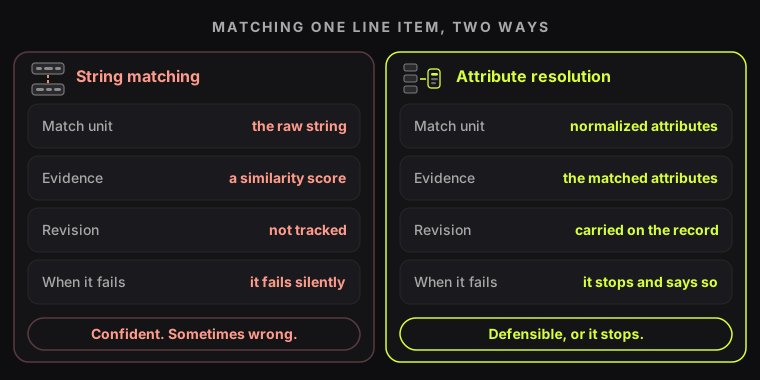
There is a second failure mode, and it is the expensive one. An unresolved line stops and gets a human. A confidently wrong match keeps moving. It flows into a quotation, then a purchase order, then a materials master, and it is typically discovered on a loading dock by someone holding the wrong physical part. Silence is the problem: a mapping engine that always returns an answer has no way to tell you which answers it should not have returned.
Why do general document AI tools not solve the mapping problem?
Because the knowledge needed to resolve an identifier is not in the document. It sits in the company's own master data, and general extraction platforms are deliberately built to be independent of that.
The document AI layer is genuinely strong now. Azure AI Document Intelligence, Google Document AI, and AWS Textract handle layout, tables, key-value pairs, and rotated scans well enough that reading is rarely the constraint. Their contract ends at the page boundary, by design: they tell you what is written, not what it means to you. General LLM extraction adds flexible schemas and real tolerance for messy layouts, and it introduces the one failure this domain cannot absorb. Asked to map an identifier it has never seen, a language model will produce a plausible one, in the same confident register it uses when it is right.
The systems that hold the answer have the opposite problem. SAP's material master, Oracle's item master, and PLM systems such as PTC Windchill are where internal identifiers and classification actually live, but they expect the inbound reference to arrive already correct. Their matching logic is usually a code table plus a customer-specific cross-reference that somebody maintains by hand. And in the gap between the two sits the tool that most of this work genuinely runs on today: a cross-reference spreadsheet with a VLOOKUP in column D, owned by one person who is about to take two weeks off.
What does a mapping layer actually require?
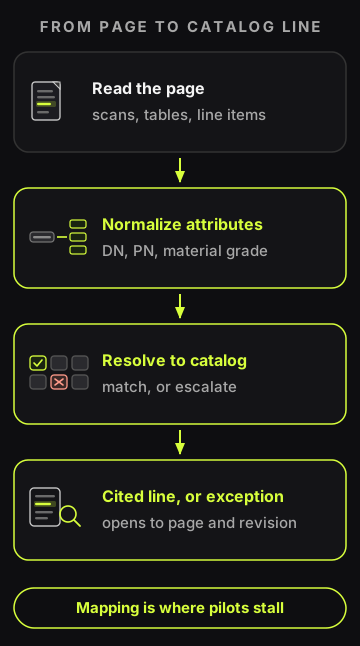
It has to treat resolution as its own step, with its own output, its own evidence, and its own failure state, rather than as a side effect of extraction. Five requirements follow from that, and each one is testable during a pilot.
- Return candidates with evidence, not an answer. The output of a match should be a ranked set of candidates, each carrying the characteristics that drove the match, plus an explicit unresolved state. A system with no way to say "I do not know" will guess, and you will not be able to tell the guesses apart from the matches.
- Match on attributes, not strings. Normalize both sides to engineering characteristics (nominal diameter, pressure class, material grade, connection and face type, motor frame, temperature rating) and match on those. String similarity between
4A-2217-Band4A2217B/Cis a coin flip. Attribute equivalence is a decision an engineer can defend in a review. - Anchor on a classification backbone. Cross-industry classification schemes such as ECLASS and UNSPSC exist because identifiers do not travel between companies and characteristics do. Mapping to a classification, then to the internal catalog, is far more durable than mapping company to company.
- Keep the mapping as durable, versioned data. A resolved mapping is an asset, not a per-document inference. Customer-specific alias tables, supplier cross-references, and human corrections should be captured once, versioned, and reused on every later document, so the same line never gets adjudicated twice.
- Cite the mapping back to source. Every resolved line should open to the exact document, page, and revision the reference came from. Verification is the only thing that makes machine matching usable in a process that ends in a purchase order.
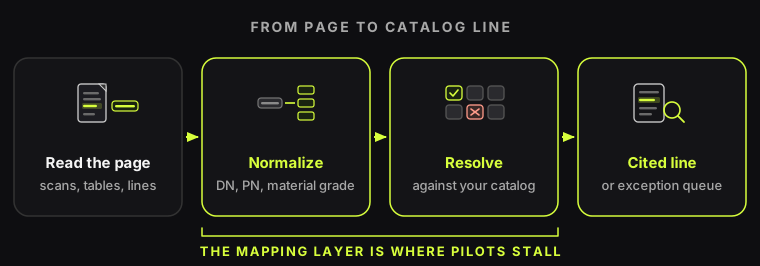
None of this removes the materials engineer or the inside sales team. It removes the window-switching in front of every decision they make, and it makes the genuinely ambiguous lines visible as a queue rather than invisible as a habit.
What do the standards bodies already tell you about this?
That identifiers are local and characteristics are portable, and that the industry has been formalizing that distinction for two decades. It is worth reading the standards landscape as evidence about where the difficulty actually is.
ECLASS and UNSPSC are cross-industry classification systems whose entire premise is that a part number means nothing outside the company that issued it, while a structured set of properties means the same thing everywhere. The ISO 8000 family of master data quality standards takes the same position from the data governance side, defining quality against explicit requirements for unambiguous identification and portable characteristic data rather than against how clean a record looks. On the physical side, IEC 61406 specifies an identification link so a component can carry a machine-resolvable pointer to its own digital data, which exists precisely because a stamped number on a nameplate has never been enough.
The regulatory direction is now pushing the same way. The EU's Ecodesign for Sustainable Products Regulation (EU) 2024/1781 introduces the Digital Product Passport, phasing in by product group across the second half of this decade, which will require machine-readable product identity and characteristic data for a widening set of goods sold into Europe. Suppliers who cannot resolve their own identifiers today will be asked to resolve them for a regulator tomorrow.
See what happens after the part number is extracted
Watch a comprehension layer read an inquiry package, resolve customer references onto an internal catalog, and cite every match back to the document line it came from.
Where is industrial document AI going?
Extraction is commoditizing, and the differentiator is moving one step downstream to the mapping layer. Three currents are pushing that shift through 2026 and 2027. Agentic tooling is arriving on both sides of the industrial transaction, which raises the cost of a silent wrong match, because an agent acting on a mapping does not pause the way a person pauses. Regulatory identity requirements, the Digital Product Passport among them, are making resolvable product identity a compliance obligation rather than an internal convenience. And supply chain reconfiguration keeps producing new suppliers, which means a steady stream of new identifier sets to onboard, which is the exact work a mapping layer is for.
What survives that is not the best reader. It is the layer that can resolve an external reference onto an internal record, show the characteristics that justified the match, and stop cleanly when it cannot. Ranger builds in that category, cited comprehension of industrial inquiry, bid, and order documents, on the view that a match you cannot trace is not a match.
Key Takeaways
- Document extraction and entity resolution are separate problems, and industrial document AI projects usually solve only the first.
- One physical item carries several identifiers at once (customer tag, customer material number, MPN, supplier code, internal material number), and none of them are derivable from each other.
- Extraction accuracy and straight-through processing measure different things, so a system can read almost perfectly and still send most lines to a human.
- A confidently wrong match is more expensive than an unresolved one, because it keeps moving through quotation, purchase order, and materials master before anyone notices.
- Durable matching works on normalized engineering characteristics anchored to a classification scheme such as ECLASS or UNSPSC, not on string similarity between part numbers.
- Resolved mappings should be versioned, reusable data with citations back to the source document, so the same line is never adjudicated twice.
The part number is where industrial document AI meets the part of the problem that was never about reading. We go deeper on what production document parsing can and cannot do in industrial PDF parsing, and on why fluent output is the wrong target in why general-purpose AI hallucinates industrial specs. For how this plays out on complex assemblies and configured products, see our precision manufacturing page.