The pitch across 2026 is that document parsing is a solved problem. Any large multimodal model, the story goes, can read any PDF you hand it, so the "upload your document" button now sits in every AI procurement and engineering tool on the market. Industrial PDFs are where that promise quietly falls apart, and the gap only shows up once the documents stop being clean marketing samples and start being a 400-page EPC tender package scanned on a plant-floor multifunction printer.
Why do industrial PDFs break "AI reads any document"?
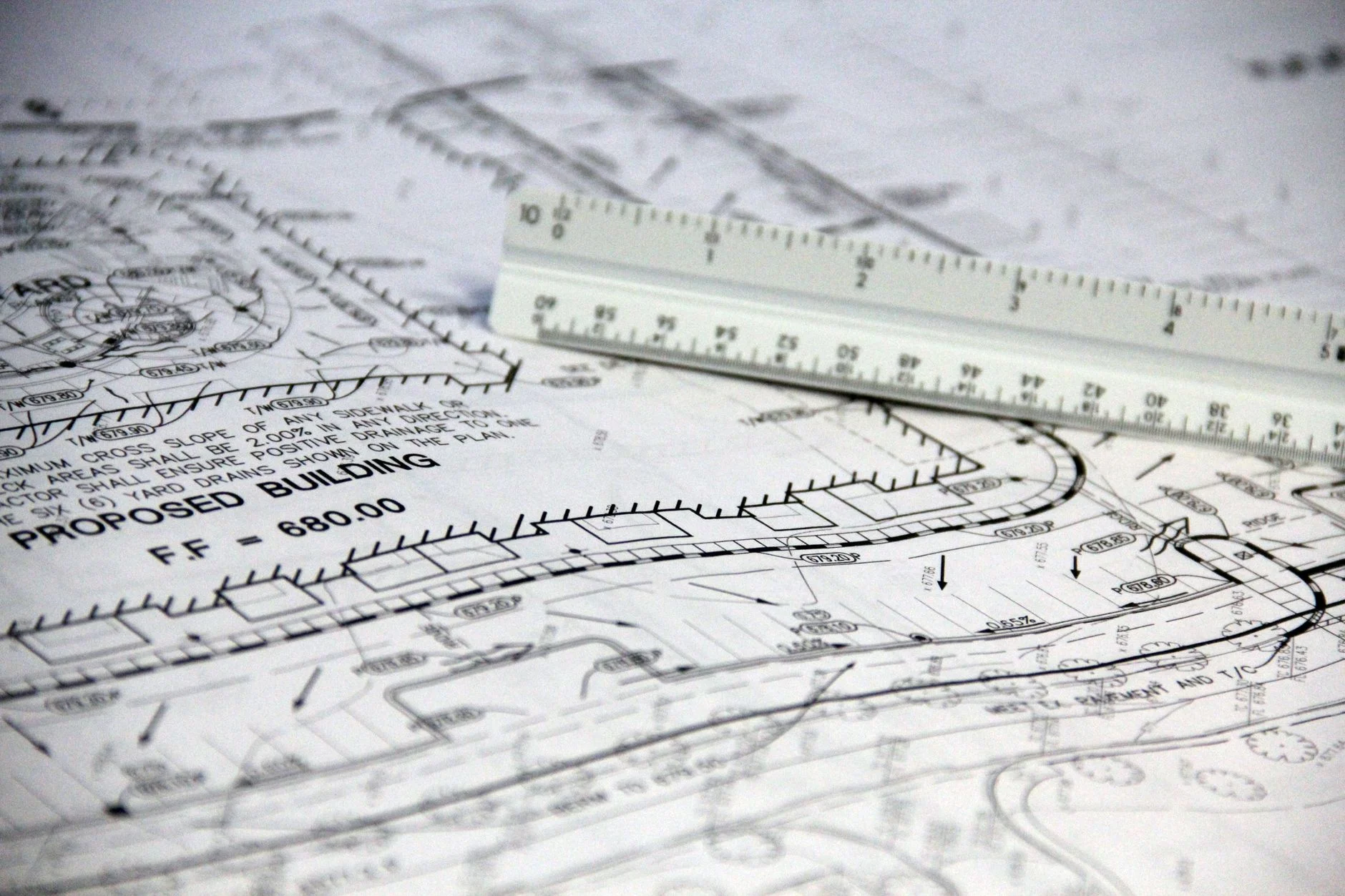
Industrial PDF parsing is hard because industrial documents are not the documents these tools were demonstrated on. A consumer invoice or a tidy contract is a single-column, born-digital file with selectable text. An industrial document is a scanned piping and instrumentation diagram (P&ID), a multi-column datasheet with values split across a footnote, a compliance matrix rotated 90 degrees to fit the page, a general-arrangement (GA) drawing with a stamped title block, or a welding procedure specification photocopied twice before anyone thought to digitize it.
The deeper issue is the format itself. A PDF is a page-description format: per the PDF Association's account of the ISO 32000 standard, it records where glyphs, lines, and images are painted on a page, not what they mean or in what order a human reads them. There is no native concept of a "table," a "column," or a "reading order" inside the file. Every parser reconstructs that structure by inference, and industrial layouts give it the least to work with.
Why do general parsers and OCR pipelines fall short?
General document AI falls short on industrial files for three specific reasons, not one. Understanding which failure you are hitting matters, because the fixes are different.
First, the "just send it to the model" approach. Feeding a raw scanned page to a multimodal LLM works impressively on a demo and degrades unpredictably on a rotated 11x17 datasheet, because the model has no reliable handle on spatial layout and will confidently transpose a value from the wrong column. Second, classic OCR pipelines like Tesseract, and even managed services such as AWS Textract and Azure AI Document Intelligence, read characters well but treat the page as a stream: reading order collapses on multi-column layouts, and a value in row 14 gets stapled to the label from row 3. Third, table structure recognition remains genuinely unsolved at industrial scale. The research community has benchmarked it for years through the ICDAR table competitions and datasets like PubTabNet, and accuracy on clean tables still does not transfer to spanning cells, nested headers, and the hand-annotated markups that fill real engineering documents.
Incumbent e-procurement and CPQ suites sidestep the problem entirely: SAP Ariba, Coupa, and the configure-price-quote tools store the PDF as an attachment and leave the reading to a person. That is honest, but it is not automation.
What actually works for industrial PDF parsing in production?
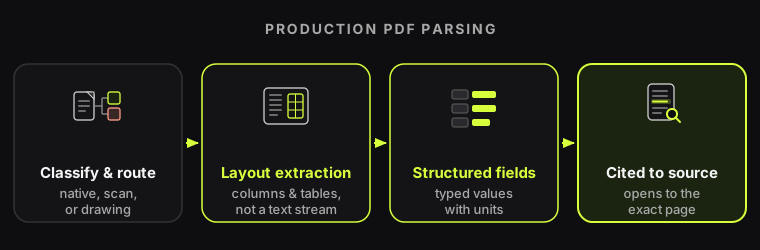
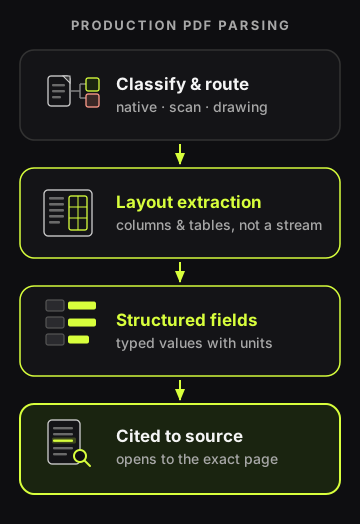
What works is not a bigger model. It is a pipeline that treats structure as something to reconstruct deliberately, then proves its work. Four stages hold up across messy industrial documents.
- Classify and route before you extract. Detect what each page actually is (born-digital text, a raster scan, or a vector drawing) and route it to the right handling. A scanned P&ID needs deskew, denoise, and OCR; a native datasheet does not. Sending everything down one path is the root cause of most silent errors.
- Extract with layout awareness, not as a character stream. Reconstruct reading order, column boundaries, and table cell structure spatially, using the coordinates on the page, so a value stays bound to its own row and header. This is the step that separates a usable table from a scrambled one.
- Ground the output to a structured model. Map each extracted value to a defined field with its unit and, for a tender, to a clause-referenced requirement spine. "Design pressure: 150 barg" has to land in a typed field, not a blob of text, or nothing downstream can compare bids or check compliance.
- Cite every value back to source. Each extracted field carries the page and coordinate box it came from, so an engineer can open the original and verify it in one click. Citation is the unit of output, not a feature added later.
What does the evidence say about accuracy at scale?
The evidence points the same way the workflow does: raw recognition is the easy part, and structure is where accuracy is won or lost. Optical character recognition on clean, high-resolution print is a mature technology, but its reliability drops sharply as scan quality falls, pages skew, and layouts turn multi-column, which is the normal state of an industrial document archive rather than the exception. Table structure recognition, measured for years across the ICDAR competitions and datasets like PubTabNet, still shows a wide gap between simple grids and the spanning, nested, annotated tables that engineered documents are made of.
The practical read for an implementer is to stop evaluating a parser on whether it can "read a PDF" and start evaluating it on three harder questions: does it hold reading order on a multi-column scanned page, does it keep table cells bound to the correct row and header, and can it show you the source coordinates for every value it returns. A tool that cannot answer the third question cannot be audited, and in regulated industrial work an unauditable extraction is not usable, regardless of its accuracy on a demo.
Test a parser on your worst industrial PDF, not a clean one
Bring a scanned P&ID, a rotated datasheet, or a 400-page tender package. See it parsed into structured, cited fields you can open back to the source page.
Where is industrial PDF parsing going?
Industrial document parsing is moving from recognition to verification, and 2026 is the inflection point. The first wave of generative and agentic tools proved that a model can produce an answer from a document; the next wave is judged on whether it can prove that answer against the source. As multimodal models keep improving at raw reading, the durable differentiator stops being extraction accuracy on a benchmark and becomes provenance: every value traceable to a page and coordinate, every table cell defensible in front of a QA or compliance reviewer.
Two industrial currents make this urgent. Re-shoring and the capex surge in energy, infrastructure, and precision manufacturing are pushing document volume up, with more tenders, more datasheets, and more vendor packages per project. At the same time, regulated buyers in pharma and energy are tightening the audit trail they require on any automated decision. Both push toward the same architecture: a comprehension layer that reads messy industrial PDFs, grounds every value in a structured model, and cites it back to source, sitting on top of the systems of record a plant already runs. That is the category Ranger is built for.
Key Takeaways
- Industrial PDF parsing is hard because a PDF stores glyph coordinates, not tables, columns, or reading order, so structure is always reconstructed after the fact.
- Feeding a raw scan to a multimodal model demos well and fails unpredictably on rotated, multi-column, or low-quality industrial pages.
- Classic OCR and managed services read characters well but collapse reading order on multi-column layouts and mis-bind values to the wrong row.
- Table structure recognition, benchmarked for years via ICDAR and PubTabNet, still does not transfer from clean grids to the spanning, annotated tables in engineered documents.
- What works in production is a pipeline: classify and route each page, extract with layout awareness, ground values to a structured model, and cite every value to source.
- The durable differentiator is shifting from recognition accuracy to provenance, because an unauditable extraction is unusable in regulated industrial work.
The next generation of industrial document tools will not win on who can "read a PDF." It will win on who can read the messy ones and prove every value against the page. See why general-purpose models miss on industrial specifications, why citing every answer back to source is the trust primitive that matters, or how this holds up in energy and petrochemical workflows.